Highlights
- Widespread Exposure: Statistics reveal that a substantial percentage of motorists drive with zero insurance or insufficient policy limits.
- First-Party Recourse: Uninsured Motorist (UM) and Underinsured Motorist (UIM) policies allow victims to recover losses directly from their own insurers.
- Internal Resistance: Insurance providers often actively contest or downplay UM and UIM claims to protect their corporate profit margins.
- Stacking Provisions: Specific state statutes allow policyholders to combine multiple insurance policy limits to cover total medical losses.
- Strategic Representation: Retaining an experienced auto accident attorney ensures that all available first-party policies are discovered and maximized.
- Comprehensive Compensation: Legal intervention prevents injured drivers from paying out-of-pocket for emergency medical care, lost income, and long-term rehabilitation.
What Are Uninsured and Underinsured Motorist Claims?
Uninsured and underinsured motorist claims are first-party insurance demands filed by an injured driver directly against their own auto insurance provider following a collision caused by an underprotected or hit-and-run driver. When a motorist causes a crash without carrying mandatory liability insurance, Uninsured Motorist (UM) coverage steps in to bridge the financial gap.
Similarly, Underinsured Motorist (UIM) coverage applies when an at-fault driver carries basic insurance, but their policy limits fall far short of paying for total medical expenses and wage losses.
According to comprehensive industry research from the Insurance Research Council (IRC) , more than 15 percent of American drivers operate vehicles without any auto insurance coverage. Additionally, millions of motorists carry only state-minimum liability policies, which rarely cover severe injuries or total vehicle replacements. Without supplementary UM and UIM coverage, victims of negligent, uninsured drivers face catastrophic out-of-pocket medical bills and lost household wages through no fault of their own.
Why Do Insurance Companies Resist Paying UM and UIM Claims?
Insurance companies resist UM and UIM claims because paying out first-party benefits directly reduces their corporate profits, leading claims adjusters to treat their own policyholders as legal opponents. While policyholders assume their own insurer will treat them fairly after paying years of premiums, UM and UIM negotiations quickly become adversarial. Insurance adjusters evaluate these claims through a lens of risk management, actively seeking procedural flaws, pre-existing health conditions, or minor liability disputes to limit compensation offers.
According to emergency health research conducted by the Centers for Disease Control and Prevention (CDC) , motor vehicle crashes generate hundreds of billions of dollars in medical costs and lost workplace productivity nationwide every year. Knowing that emergency medical care costs escalate rapidly, insurance adjusters frequently attempt to minimize financial liabilities by deploying aggressive claim tactics against policyholders.
To protect corporate profit margins during first-party claim evaluations, insurance carriers frequently rely on these strategies:
- Claiming the injured driver shared fault for the crash under state negligence laws.
- Arguing that emergency medical procedures and ongoing physical therapy were unnecessary or excessive.
- Attribute permanent physical pain to pre-existing conditions rather than the recent impact.
- Offering rapid, low-ball financial settlements before the injured driver consults legal representation.
- Delaying claim processing to leverage financial strain against the injured policyholder.
How Does Policy Stacking Increase Your Financial Recovery?
Policy stacking increases financial recovery by combining the coverage limits of multiple auto insurance policies or vehicles under a single policy to cover extensive medical losses. Depending on state statutes and specific policy language, an injured driver may be entitled to “stack” UM or UIM limits. For instance, if a driver owns two vehicles with $50,000 in UIM coverage on each, policy stacking could potentially allow access to $100,000 in total available coverage for a single crash.
Working alongside a skilled auto accident attorney allows crash victims to identify complex policy provisions that permit stacking. Insurance carriers rarely inform policyholders of stacking options voluntarily, as doing so increases their total payout obligation. An attorney carefully reviews all household policies, umbrella coverages, and state-specific insurance regulations to uncover every available dollar of policy coverage, ensuring that victims receive maximal compensation for long-term care, surgeries, and lost earning capacity.
What Steps Should You Take Immediately After a Crash with an Uninsured Driver?
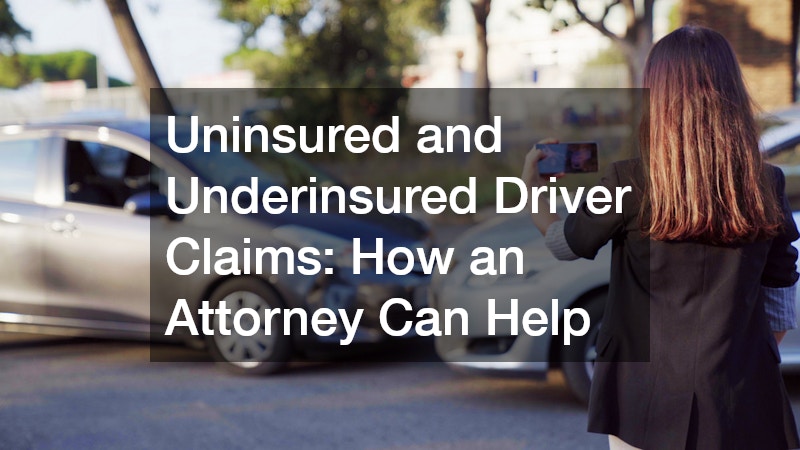
Immediately following an accident with an uninsured driver, you must contact law enforcement, gather scene evidence, seek prompt medical care, and avoid giving recorded statements to insurers without representation. Navigating the immediate aftermath of a collision involves strict legal deadlines and evidentiary demands. Because uninsured drivers frequently attempt to flee the scene or persuade victims not to involve police, capturing accurate official documentation early is vital for proving liability later.
Safety data compiled by the National Highway Traffic Safety Administration (NHTSA) highlights that crash documentation directly impacts liability determinations and long-term financial recovery. Failing to secure police reports or skipping immediate medical evaluations can compromise your UM or UIM claim before it even begins. Insurance carriers often argue that gaps in treatment prove injuries were minor or sustained elsewhere.
Following an accident involving an uninsured or underinsured driver, injured parties should take these key actions:
- Call 911 immediately so law enforcement can create an official accident report documenting driver details.
- Take photographic and video evidence of vehicle damage, road conditions, and physical injuries.
- Collect contact information from any neutral eyewitnesses who observed the crash.
- Seek emergency medical attention right away to establish a clear timeline of crash-related trauma.
- Refrain from signing insurance waivers or providing recorded statements prior to speaking with an attorney.
How Does an Attorney Negotiate directly with Your Insurance Provider?
An attorney negotiates directly with your insurance provider by filing formal demand packages, demonstrating fault, proving total damages, and preparing for court litigation if necessary. Partnering with a dedicated auto accident attorney removes the burden of direct communication with insurance adjusters. Your lawyer gathers complete medical records, consults economic specialists to project future lost wages, and drafts a comprehensive demand letter outlining the full scope of your physical and financial injuries.
If the insurance carrier refuses to offer a full and fair settlement up to the policy limits, an attorney can initiate formal litigation or binding arbitration against the insurer. Having trial-ready legal counsel forces insurance companies to treat UM and UIM claims with seriousness. By holding insurers accountable to their contractual duties, legal representation ensures that victims recover the compensation needed to pay off medical bills and rebuild their lives.
Navigating a collision with an uninsured or underinsured driver presents complex legal and financial hurdles, but you do not have to handle your insurance company alone. While insurance adjusters prioritize protecting corporate bottom lines, securing the compensation you deserve requires deep knowledge of policy terms, coverage stacking, and state insurance laws. By documenting your injuries, avoiding early settlement traps, and working with an experienced attorney, you can hold insurance companies accountable and protect your long-term financial security.